

Let’s clarify from the outset that statistically, truckers exhibit a higher level of safety on the road compared to most other drivers. A University of Michigan study underscored this fact, revealing that commercial vehicle accidents were primarily caused by passenger cars (81-91%), with 70% of these accidents attributable to actions taken by passenger vehicle drivers and 16% to errors made by truck drivers, occurring simultaneously in 10% of cases.
Now, you might wonder why we’re discussing safety as a trucking and logistics firm, given this commendable track record. The biggest reason, at Buchanan, we take immense pride in ‘Setting the Standard for Safety, One Mile at a Time’. We actively seek and hire safety-conscious drivers for our team.
The other reason we’re sharing safety tips within a trucking and logistics company pertains to concerning trends in the trucking industry. Jury awards exceeding $10 million have surged dramatically, with the average size of verdicts exceeding $1 million skyrocketing nearly 1,000% from 2010 to 2018, leaping from $2.3 million to $22.3 million. What makes things worse is a substantial portion of lawsuits targeting truckers and trucking companies revolve around claims of driver negligence.
Our aim is to empower truckers to take a proactive approach to their preparation and enhance their defensive driving skills while operating a truck. In the quest to understand the causes of serious accidents, the Federal Motor Carrier Safety Administration (FMCSA) and the National Highway Traffic Safety Administration (NHTSA) conducted the Large Truck Crash Causation Study (LTCCS). This study unveiled critical events leading to collisions, including 32% involving lane departures, 29% due to speed, cargo shifts, vehicle failures, or adverse road conditions, and 22% stemming from rear-end collisions. Drivers were found responsible in 87% of cases, primarily due to decisions and awareness issues, such as excessive speed, tailgating, distractions, and inattention. While vehicle maintenance contributed to just 10% of crashes. Regardless of your experience, it never hurts to safeguard both your wallet and your life with these 20 straightforward safety tips.
1. Prioritize Yourself
- Your well-being is crucial
- Maintain health by eating, exercising, and resting adequately
- Set a goal to get 7+ hours of sleep nightly
- Adjust your truck's seat, steering, and device navigation for comfort
- Find safe locations to take short walks that do not include the shoulder of a highway

2. Plan Your Trip in Advance
Enhance your safety significantly by pre-planning your trip. Stay updated on roads, traffic, construction, and state regulations. Plan meticulously before starting your journey. Be vigilant about potential hazards, including:
- High crime areas: Shipments attract theft, endangering drivers. Many cargo thefts and hijackings occur within a few miles of the load’s origin. Choose safe stops, avoiding poorly lit or remote places
- Traffic congestion: High traffic increases accident likelihood. Identify congested route segments, ready to slow down or take an alternate path
- Find safe locations to take short walks that do not include the shoulder of a highway
3. Know the Forecast for Where You Will be Driving
Inclement weather leads to 21% of crashes. Utilize bad weather tips and Buchanan driving policy.
4. Disconnect
Keep your phone down. Buchanan prohibits mobile use while driving commercial vehicles. Nearly 500,000 crashes per year involve large trucks. Safe, attentive driving can help avoid road problems.
5. Simple Safety - Entries and Exits
Use three points of contact when entering or leaving your truck. Prevent slips and falls by maintaining a secure grip with both hands. You will also want to be sure you buckle up before getting on the road. It’s not only a law but a safety imperative. Wear your seatbelt always. CDC states you’re 30 times more likely to be ejected during a crash without it.

6. Defensive Driving
Defensive driving is your greatest safeguard, considering you lack control over other drivers’ actions. Most motorists lack safe practices around big trucks.
To maintain effective defensive driving:
- Watch Blind Spots: Stay alert to blind spots: around 10-15 feet ahead, behind the trailer, on the passenger and driver sides
- Lane Change: Be cautious when turning or switching lanes
- Safe Following Distance: Follow FMCSA guidelines of 1 second per 10 feet of vehicle length at 40 mph, with an extra second for speeds over 40 mph. Class A truck and trailer’s 72-foot length calls for 7 seconds under 40 mph and 8 seconds over
- Stay Prepared: Emergencies arise quickly, especially on highways. Stay calm; if you become stressed, find a safe spot to regain composure. Monitor conditions a quarter-mile ahead and adjust speed for potential risks
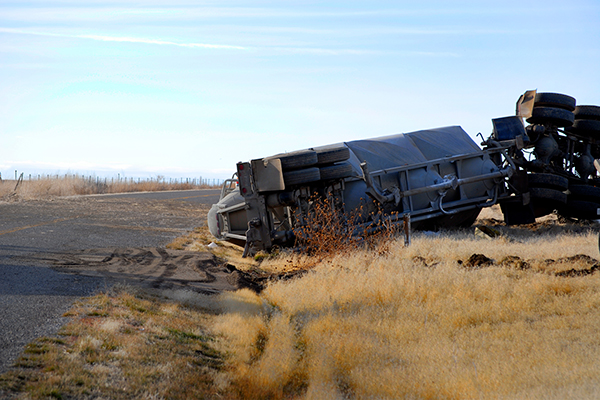
- Curvaceous Caution: Large trucks should reduce speed on curves, even if the limit seems acceptable. Slow 5-10 mph below the posted speed to prevent tipping due to your vehicle’s center of gravity
7. Check Mirrors
Mirror check every 8-10 seconds to catch vehicles in blind spots. Maintain awareness of mirrors, hood, road, and gauges.
8. Use Lights for Visibility
Turn headlights on 30 minutes before dusk until 30 minutes after sunrise. Signal early and keep signals on until the turn is complete.
9. Keep Your Cargo Secure
A poorly secured load can lead to a tractor-trailer unit losing control through jackknifing or rolling over. Even for flatbed loads, improper securing poses risks to drivers and others on the road. To prevent shifting or falling cargo, employ suitable securing tools for both your equipment and load type. For dry vans and refrigerated cargo, employ load locks, airbags, and cinch straps as necessary. For flatbed trailers, adhere to load-specific regulations using appropriate straps or chains as required, in line with DOT guidelines.

10. Maintenance Schedules
Maintaining a routine preventive maintenance plan is vital for safe commercial vehicle operation. In an article, FMCSA highlights maintenance as a prime factor behind tractor-trailer accidents. Establish a schedule with a mechanic if you don’t already have one. Buchanan Hauling, as of the writing of this article, offers tire and brake work, repair to lights, DOT inspections, and preventative maintenance services to trucks even if they are not part of their fleet.
11. Pre & Post Trip Inspections
Pre and post-trip inspections are vital for detecting equipment flaws before they jeopardize safety. Federal rules mandate at least one daily inspection, documented in your hours of service log. Prioritize these areas during your vehicle check:
- Steering System: Assess steering column play, rack components, power steering fluid, and steering tires
- Braking System: Inspect the air compressor, brake lines, pads, drums, calipers, low air pressure alarm, and brake lights
- Other Areas: Scrutinize fifth wheel assembly, headlights, marker and signal lights, and tires
If unsure about inspection details, approved checklists from FMCSA, USDOT, mechanic shops, or Buchanan Hauling’s Service Department are available. Inspections are crucial for safety and must never be neglected.
12. Avoid Distractions
An accident takes only seconds to occur. We know that it takes a lot longer for a loaded truck to stop. Stay alert on long drives, avoid distractions, and prioritize the road.
- As mentioned above, no phone use while driving
- Silence radio in heavy traffic, bad weather, or tough conditions
- Set GPS and eat any food before even starting the engine to reduce distractions
13. Use a GPS or Mapping Device
While a specialized trucking GPS aids route accuracy, it shouldn’t be your sole guide due to its imperfections. A truck atlas is your superior choice for confirming truck-approved paths and avoiding issues. For congested regions, use an atlas to plan detours around traffic or construction. Additionally, many facilities provide step-by-step directions alongside load paperwork. If not, and you’re uncertain about a route, communicate with the facility or dispatcher before arrival for accurate directions.
14. Prepare for Dangerous Road Conditions
Ever-changing road conditions pose risks to all drivers, particularly those of larger vehicles like trucks. Be vigilant for these hazardous scenarios:
- Icy Roads: Heed weather and road reports to anticipate winter conditions. If alerts indicate ice or you encounter it, find a safe spot to wait for state maintenance to clear roads. Apply standard winter driving tips
- Snow: Unplowed snow can transform into ice. In some areas, highways mandate chains. Chains help in heavy snow but are futile on icy roads. If roads are icy, wait for clearance
- Rain: When it rains it can create slick surfaces due to oil residue. Reduce speed, stay in control, and be cautious of slow/stopped vehicles in low visibility
- Fog: Drive slower in dense fog with low-beam headlights. Use markers and flashers for visibility
- Disabled Vehicles: Slow down and shift lanes when passing roadside disabled vehicles. If unable to switch lanes, slow further. Beware of hidden dangers
- Road Construction: Follow construction signs and speed limits; watch for workers and machines. Around one-third of fatal work-zone accidents involve large trucks. Drive carefully in construction and school zones. Fines for violations double in these areas; CDL holders face additional penalties
- Accidents: Reduce speed or stop safely when approaching accidents. Use flashers and clear paths for emergency vehicles
- Animals on the Road: Avoid sudden maneuvers for animals; hitting them may be safer. Some companies discipline drivers who evade animals due to potential accidents
15. Take Adequate Breaks
Driver fatigue is a major trucking accident cause. New drivers, especially, must heed tips like taking breaks to avoid fatigue. FMCSA tackles this with hours of service (HOS) rules:
- 14 hours of on-duty time in 24 hours
- 11 hours of driving time in 24 hours
- 8 hours of driving before a 30-minute break
- 10 hours sleep to reset 14-hour and 11-hour limits
With the added precision of electronic logging, it has tightened HOS compliance. These rules prioritize safety for drivers and road users. Studies have also shown that fatigue mirrors driving under alcohol or drugs.
16. Invest in a Dash Cam or Event Data Recorder (EDR)
Prioritizing accident prevention is essential, but unforeseen events are inevitable, even for safe drivers. Determining faults in accidents can be complex. To safeguard against unjust blame, legal repercussions, higher insurance fees, and job loss, consider a reliable dash cam. We see funny and even scary videos caught on dashcams all the time on social media. Some of those likely protected a driver and his company from fraudulent claims. Yearly, numerous truck drivers are exonerated from fault accusations due to dash cam evidence. Invest in a dash cam to potentially save yourself from such situations.
17. Maintain Space Cushion
Keep 7-8 seconds between you and the vehicle ahead; increase to 14 seconds in poor weather. Always remember that you’re in control of a 72-foot, 80,000-pound vehicle. Understanding your stopping distance based on load weight and size is vital for safety. Adapt your speed and space according to road conditions.
Monitor nearby drivers, allowing space for their actions. You’re the pro driver; focus on your control. When in the city, monitor about a block ahead of you, and when on the Highway, scan about a quarter mile ahead so you can increase reaction time.
When conditions worsen, exercise added caution and increase space. Monitor not only the front space but also the sides. If a vehicle remains beside you, slow down further, allowing them to pass and expanding your truck’s space.
"A University of Michigan study underscored this fact, revealing that commercial vehicle accidents were primarily caused by passenger cars (81-91%), with 70% these attributable to actions taken by passenger vehicle drivers and 16% errors made truck drivers, occurring simultaneously in 10% cases."
18. Situational Awareness
Maintaining situational awareness aids in preventing accidents and adapting to road changes. The habit of regularly checking mirrors ensures constant vigilance.
However, this is just one aspect of trucking situational awareness. Other factors include:
- Use the path left by the previous truck to guide your backing
- Signal when changing lanes or turning
- Wide turns to avoid nearby objects due to off-tracking
- Prior to reversing, inspect the surroundings with a 360-degree walk
- Inspect the parking area before parking, unloading, or coupling to a new trailer
- Choose well-lit spots
- Engage four-way flashers and honk before reversing
- Double-check before lane changes, intersection entry, or pulling onto roadways
19. When unloading freight
- Check if the freight is against the door before opening
- Open doors slowly
- Swing the door with both hands to prevent the wind from catching it
- Secure the door with a tie-back cable or chain
- Lift freight safely using the proper technique
- Ensure no workers or forklifts are in the trailer before leaving the dock
20. Be Predictable
Remember, others can’t read your thoughts, and many drivers lack understanding of sharing the road with large commercial vehicles. Prioritize safe operation for you and fellow road users. Here’s what it entails:
- Early Signals: Activate turn signals well before changing lanes or turning
- Steady Lanes: Minimize unnecessary lane changes; expert drivers keep within lane lines
- Consider Fellow Truckers: If another big truck trails you, anticipate their slower stopping time. Signal and slow sooner
- Consistent Speed: Maintain steady speeds to prevent congestion and retain safety space
- Thoughtful Overtaking: If unable to swiftly pass another truck, abstain. Passing can create congestion, diminishing your safety zone
- Safety Top Priority: Safely working, driving, and returning home to family is paramount. No load is worth compromising safety
- Road Conditions: Slow down or halt during perilous conditions
- Distraction Elimination: Stop for texts; that 4.6 seconds can save lives
- Vehicle Maintenance: Ensure well-maintained brakes, tires, and steering
- 360-Degree Awareness: Stay vigilant, manage blind spots, and halt when tired
- Defensive Driving: Drive cautiously to prevent accidents
In this guide, we explored truck driver safety tips that encompass every facet of your journey—starting from pre-trip preparations and spanning through on-road navigation, arrival procedures, and concluding with post-trip inspections. Whether you’re a seasoned professional or a newcomer to the industry, these reminders hold immense value in ensuring your safety and the safety of others on the road. Prioritize safety on the road, valuing your life and the lives of others above all else.

Come drive for a company where you are not just a number, but that makes you part of the family!
Other Buchanan Company Blogs
Choosing the Right Retail Freight Carrier | Transporting Military Goods and Equipment: Why Buchanan Hauling and Rigging, Inc. Leads the Mission | Clean Roadside Inspection Checklist | Trucking Tire Chain Laws by State | Container Drayage Transport Carrier | A Truck for Every Load | 15 Tips to Make More Money as a Company Driver or Owner-Operator